The Ghana–Guinea Union (1958–1963):
Africa's First Step Towards Unity
"Our independence is meaningless unless it is linked with the total liberation of Africa."
— Kwame Nkrumah, 1957
A Dream Born in the Dawn of Independence
The late 1950s marked the beginning of a new chapter in African history. Across the continent, nations were casting off colonial rule and reclaiming the right to govern themselves. Yet for two remarkable leaders—Kwame Nkrumah of Ghana and Ahmed Sékou Touré of Guinea—political independence was only the beginning.
They believed that true freedom could never be achieved by individual nations standing alone.
Instead, they envisioned something far greater: a united Africa, where the artificial borders created during the colonial era would no longer divide peoples who had shared centuries of history, commerce, language, and culture.
Their answer was bold.
In November 1958, Ghana and Guinea announced the creation of the Union of African States, the first serious attempt by independent African nations to build a political federation.
Although the Union existed for only a few years, it remains one of the most ambitious and visionary projects in modern African history.
Guinea's Courage Changed African History
The story begins not in Ghana, but in Guinea.
In September 1958, France held a referendum asking its African colonies whether they wished to remain within the newly proposed French Community or become immediately independent.
While nearly every French territory voted to remain under French influence, Guinea made history.
Led by Ahmed Sékou Touré, Guineans overwhelmingly voted for complete independence.
Touré's response became legendary:
"We prefer freedom in poverty to riches in slavery."
France reacted swiftly.
Within weeks, French administrators departed Guinea. Government offices were emptied, equipment removed, archives destroyed, and even light bulbs, telephones, and furniture were taken away. The intention was clear—to make Guinea's decision appear impossible.
Instead, Guinea became a symbol of African determination.
Ghana Extends a Hand
Only one year earlier, Ghana had become the first sub-Saharan African nation to achieve independence under Kwame Nkrumah.
Rather than watching Guinea struggle alone, Nkrumah immediately offered financial assistance, technical expertise, and political support.
The friendship between Nkrumah and Sékou Touré quickly evolved into something extraordinary.
Both men believed that Africa's future depended not on isolated nation-states but on continental unity.
Together they resolved to begin building that future themselves.
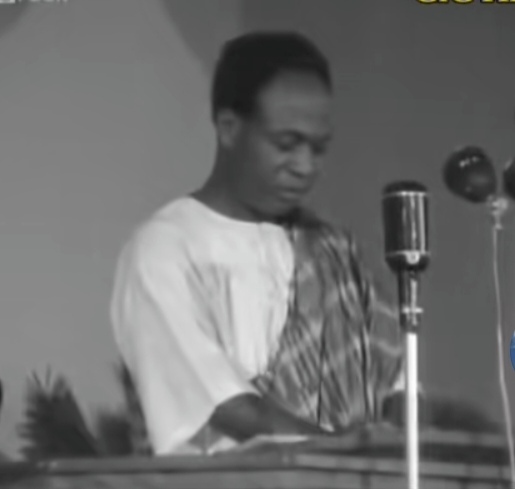
On 23 November 1958,
Ghana and Guinea formally established the Union of African States.
The friendship between
Nkrumah and Sékou Touré quickly
evolved into something extraordinary.
The Birth of the Union of African States
On 23 November 1958, Ghana and Guinea formally established the Union of African States.
It was intended to become the foundation of a future continental federation.
The Union proposed closer cooperation in:
- Foreign policy
- Economic development
- Defence and security
- Scientific research
- Education
- Transportation
- African liberation efforts
Most importantly, it demonstrated that independent African nations could voluntarily unite rather than compete.
This idea was revolutionary.
At a time when colonial borders threatened to divide the continent permanently, Nkrumah and Touré insisted that Africa's future should be shaped by shared history rather than inherited frontiers.
Mali Joins the Vision
In 1961, the newly independent Republic of Mali, under President Modibo Keïta, joined the Union.
The partnership between Ghana, Guinea, and Mali represented some of West Africa's strongest advocates of Pan-Africanism.
Together, the three countries promoted:
- African economic cooperation
- Anti-colonial solidarity
- Educational exchange
- Joint diplomatic initiatives
- Support for liberation movements across the continent
Although practical political integration proved difficult, the Union showed that African unity could move beyond speeches into concrete action.
Guinea: A Centre for African Liberation
During the 1960s, Guinea became one of Africa's most important centres for anti-colonial movements.
From Conakry, liberation leaders received political support, training, and diplomatic recognition.
Guinea supported independence movements in:
- Guinea-Bissau
- Cape Verde
- Angola
- Mozambique
- Zimbabwe
- Namibia
- South Africa
Its capital became a meeting place for freedom fighters, intellectuals, diplomats, and Pan-African activists from across Africa and the diaspora.
For many emerging nations, Guinea represented not only political independence but practical solidarity.
The Road to the Organisation of African Unity
Although the Union of African States did not survive as a political federation, its influence was enormous.
It demonstrated that independent African governments could cooperate voluntarily while respecting one another's sovereignty.
Many of the principles first explored within the Union later appeared in the Organisation of African Unity (OAU), founded in Addis Ababa in 1963.
Kwame Nkrumah hoped the OAU would evolve into a genuine federal government for Africa.
While many leaders preferred a slower path toward cooperation, the Union had already shown what deeper integration might look like.
Today, the African Union (AU) continues many of these same aspirations through continental cooperation in trade, infrastructure, peacekeeping, education, and development.
Why the Union Still Matters Today
More than sixty years later, the Ghana–Guinea Union remains one of the boldest political experiments in African history.
Its leaders understood something that still resonates today:
West Africa has never been merely a collection of separate countries.
Long before colonial borders were drawn, the peoples of Guinea, Ghana, Senegal, Mali, Sierra Leone, The Gambia, Côte d'Ivoire, Liberia, and beyond traded together, studied together, intermarried, and built kingdoms that crossed today's frontiers.
The Union sought to restore that older spirit of cooperation.
Although history remembers the Union as short-lived, its ideas never disappeared.
They continue to inspire regional organizations such as ECOWAS, the African Continental Free Trade Area (AfCFTA), and the African Union's long-term vision for continental integration.
A Legacy That Lives On
The Ghana–Guinea Union was never simply a political agreement.
It was a declaration that Africa's future would be stronger through unity than division.
For Guinea, it marked the country's emergence as one of the leading voices of African independence.
For Ghana, it reflected Kwame Nkrumah's unwavering commitment to Pan-Africanism.
For Africa, it became the first practical step toward a dream that continues to inspire millions across the continent and throughout the global African diaspora.
Its institutions may have faded, but its ideals endure.
The Ghana–Guinea Union remains one of the earliest and most powerful reminders that African unity is not merely an aspiration—it is part of the continent's enduring historical legacy.